
Moxibustion
Moxa involves the use of a herb called mugwort, applied either directly or indirectly to the skin to stimulate the channels through its warming qualities. The pounded dried leaves of the herb are used to form a high quality golden coloured compound. This can be used in many forms including small cones, tiny half rice grain pieces and larger round balls that are placed on the handle of the needle.
The heat from this herb is warming, soothing and extremely relaxing. It is very effective for releasing tightness in the muscles, relaxing tension and invigorating the flow of qi.
Warm Bamboo
Ontake Warm Bamboo is a moxibustion technique with two additional components: pressure and rhythm. A short piece of bamboo is filled with moxa wool. When the moxa is ignited, the bamboo gets warm and can be applied to the skin. The bamboo can be held, tapped, pressed or rolled rhythmically along the acupuncture channels and on specific points. These techniques can be applied rhythmically at specific frequencies that have been shown to resonate with each of the meridians. This rhythmic application of heat is extremely relaxing and can be used for stress relief, to soften tight muscles, relieve pain, and improve the movement and function of qi and blood.
Auricular Acupuncture
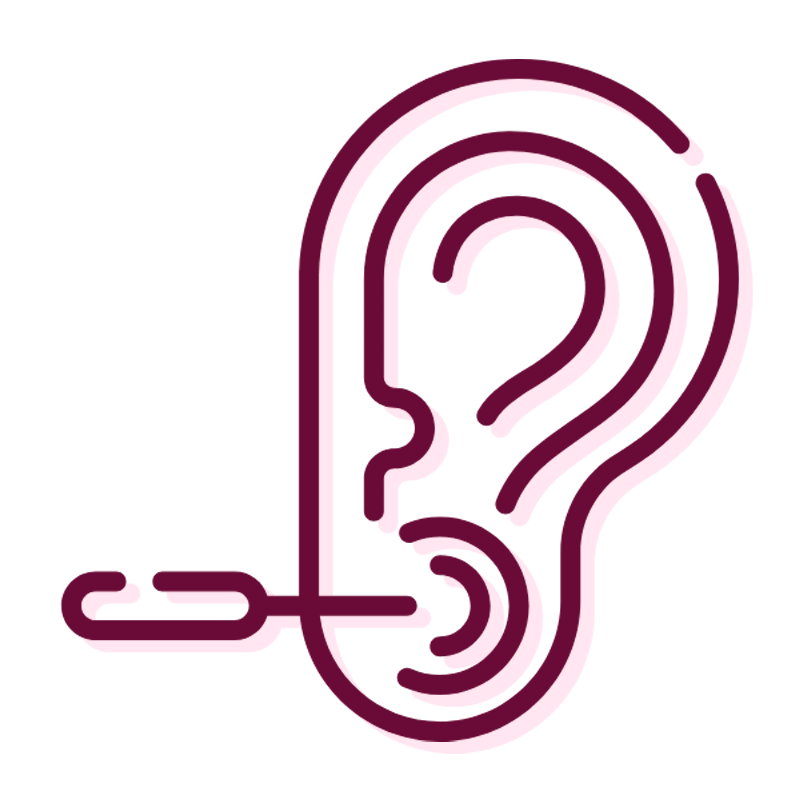
The ear is a micro-system reflecting in miniature, the entire human body. Each part of the body has a corresponding auricular point or area. These points reflect the physiological or pathological state of the body and can be stimulated to regulate dysfunction of their corresponding body part. Auricular therapy can be used on its own, using point prescriptions to address particular conditions. It can also be used to complement and reinforce a standard acupuncture treatment.
Cupping
Cupping involves placing special suction cups on the skin. It helps to increase qi (energy) flow and is therefore effective in releasing tight muscles and is especially helpful for tension and stiffness in the back and shoulder area.

Sotai and Channel Stretching Exercises
“to become free of pain, one must move away from pain towards comfort.”
Keizo Hashimoto
Taiso means exercise in Japanese. Sotai is the same two characters reversed, So meaning to work or manipulate (as in a puppet), and Tai meaning body. Sotai therefore means manipulation or movement for the purpose of restoring or maintaining health.
Sotai are a series of exercises that are used to bring about structural realignment and are therefore particularly helpful for the musculoskeletal system. Together with channel stretching exercises, they can dramatically release restrictions in range of movement and improve structural imbalances. Tight muscles impair qi (energy) flow. Distortion in the body’s musculature can also affect the internal organs and vice versa.


Research
You can get more information on current scientific research into the effectiveness of acupuncture by visiting the following sites:
British Acupuncture Council
Journal of Chinese Medicine
Evidence Based Acupuncture


