
Shonishin Paediatric Japanese Acupuncture & Meridian Therapy training – 2 weekend course – April & June 2024
14th December 2023
Scroll downShonishin Paediatric Japanese Acupuncture
with Stephen Birch PhD MBAcC

North London venue
Please note the venue location has been changed and the course is NO LONGER at City College of Acupuncture
13th/14th April 2024
15th/16th June 2024
Stephen Birch has written extensively about many aspects of Japanese Acupuncture and is the author of Shonishin: Japanese Paediatric Acupuncture. He teaches internationally and is the Academic Dean of the European Branch of the Toyohari Association.
Comments from previous courses:
“Brilliant course! Very inspired – more than I had hoped for. I am sure this will help me in my general practice too.”
“Can’t wait to get started treating children. Also a great introduction to Japanese Meridian therapy and I want to study more.”
“Really enjoyed Stephen’s lectures – very easy to listen to. I liked the way the lecture was mixed with treatments. Great to see Stephen work with the children.”
“Very enjoyable course, with easy to understand information which can be applied straight away.”
“Very engaging, stimulating & well explained. Kept simple enough to feel confident about starting work with children after sufficient theoretical study & technique practice.”
This style of paediatric acupuncture does not rely on any previous knowledge of Japanese acupuncture & can be integrated into any style of treatment.
You will learn the following:
- To apply simple and highly effective techniques for treating children using specialist Shonishin acupuncture tools.
- Japanese meridian therapy patterns for root treatment.This can also be applied to adults.
- Branch treatment options including direct moxa, use of intra-dermal needles, press spheres & press tacks.
- How to treat a wide range of common childhood conditions including digestive complaints, sleep & behavioural problems, respiratory & immune related conditions including asthma, allergies & recurrent infections.
SEE BELOW FOR MORE DETAILED INFORMATION ABOUT THE COURSE CONTENT
Keiraku Chiryo – A Practical Introduction to Japanese Meridian Therapy
Saturday April 13, 2024
Instructor: Stephen Birch PhD, acupuncturist
Keiraku Chiryo – Meridian Therapy, is a traditional form of acupuncture from Japan. It uses very delicate needling techniques to regulate the jing-luo or meridian system following traditional theories of acupuncture. Diagnostic decisions are largely based on palpation methods, especially of the radial pulses and abdominal palpation. The practice methods of this system are checked through continuous feedback of the pulses and other palpatory findings in a very systematic and practical manner.
Meridian Therapy, is a movement to “return to the classics” through modern clinical practice. The movement started in Japan in the 1920s reaching maturity by the early 1940s. Today this movement represents ‘traditional acupuncture’ in Japan with as much as 20% of the acupuncturists in Japan thought to be using it. While there is a range of styles of Meridian Therapy with various ideas, approaches and methods, there are a few basic ideas that these styles have in common. Each places great emphasis on the following: radial pulse diagnosis, especially six position diagnosis; abdominal diagnosis; the basic theories of the Nan Jing, where the meridian circulation model is placed at the center of practice. The goal of treatment is simply to tonify the meridians that are deficient and drain those that are excess; very gentle needling techniques are used to accomplish this.
In this introductory workshop, after a brief discussion of the theories and development of Keiraku Chiryo, the focus will shift to practical skills, in particular: the basic diagnostic approaches of pulse and abdominal diagnosis, primary needling techniques, [barely inserted needling techniques (0.5 – 2 mm)] and a systematic step by step simplified treatment approach. During the workshop the instructor will teach how to perform the core ‘root’ treatment. This treatment system is suitable for almost all patients, especially those who prefer not to feel the needles. At the end of the workshop the instructor will briefly explain how to continue studying and deepening one’s skills by explaining briefly about the Toyohari system.
In the following 3-days of teaching on Japanese pediatric treatments Meridian Therapy is taught as one of the core treatments for children. A simplified form is taught that is easy to reproduce on younger children. This one day introduction to Meridian Therapy serves both to introduce how to treat adults and older children with this treatment system but lays the foundations for how to use it on younger children. Thus for those studying paediatric treatment, this is a required part of the 2-weekend series.
The workshop will be taught in as hands on an approach as possible to facilitate learning the basic system and its various techniques of diagnosis and treatment.
A Workshop on Shonishin: Japanese Acupuncture for Children
Sunday April 14, 2024 & Saturday-Sunday June 15-16, 2024
Instructor: Stephen Birch PhD, acupuncturist
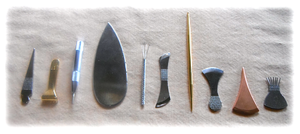
Shonishin (children’s needle therapy) is a unique and specialized pediatric style of acupuncture that developed over 250 years ago in Japan. It recognizes the fact that children do not like needles and has instead developed specialized treatment techniques, many of which are non-invasive and thus not frightening to the child. In ancient China, when acupuncture was first being described, nine kinds of needles were described, several of which had rounded ends, that are rubbed or pressed on the skin instead of inserted into the body. In Shonishin, following these ideas, a variety of instruments have been developed that can be pressed, rubbed, tapped or lightly scratched on the skin to give different kinds of gentle stimulation. When applied for short periods of time in simple systematic patterns, these simple treatment techniques have been found effective for a wide variety of pediatric problems from birth through age five or so. As children get older, and/or their problems are more difficult or stubborn, acupuncture is used more often, for which specialized acupuncture techniques and insertion methods have also been developed and tailored to match the needs of children, so that they are comfortable and not aversive for the child or parent.
The general treatment can be very useful for fortifying the child’s vital energy and helping correct their constitution. When correctly applied, this treatment will not only help symptoms to naturally improve, but will give a greater sense of well-being and help resolve many other small day to day problems, helping make the child less prone to illness. The basic treatment has the added advantage of being easily taught to parents so that they can use it regularly at home, thus increasing frequency of treatment and allowing parents to participate actively in the treatment of their children. This tends to reinforce the effects of treatment, and helps make the treatment more enjoyable for everyone. This style of pediatric acupuncture can be used by any acupuncturist regardless of general style of practice.
In addition to the Shonishin general treatment a simple form of Meridian Therapy root treatment can also be used with great success. For babies and small children a non-inserted needling technique is used, for older children one can use a simple form of the Meridian Therapy root treatment with painless inserted needling techniques. The combination of the two root treatment approaches is very helpful for pediatric patients. For branch treatment that helps address symptoms, a variety of techniques are used. These include use of very thin and short press-tack needles, use of press-spheres or intradermal needles, use of inserted needling techniques, occasional use of moxa or cupping.
Shonishin is used to treat a wide variety of problems using these specialized approaches. The following list includes the most commonly treated conditions: irritability, impatience, excessive crying at night in infants; hyperactivity; attention problems in small and school age children; dream disturbed sleep; indigestion; diarrhea; constipation; allergies; chronic stuffy or runny nose (from repeated colds and/or allergies); asthma (including allergic asthma, exercise induced asthma); weakened immune system – the child that catches cold frequently or has recurrent viral infections; bedwetting; stammering or stuttering; weak constitution, including infants with inadequate weight gain, frail children that are not as active as others; rashes, for example nettle rashes; urticaria; eczema; hernia; ear infections; neurological problems resulting for example from cerebral palsy.
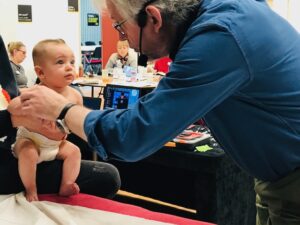
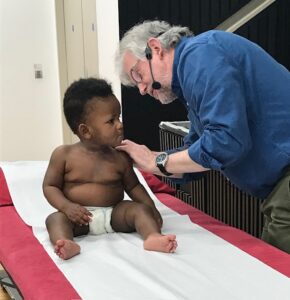
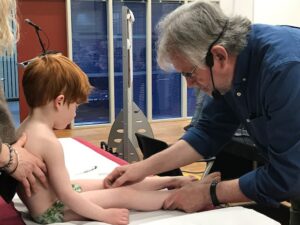
This three day workshop will teach how to use these three different aspects of treatment. There will be practice of techniques and the instructor will do treatment demonstrations on children/babies to illustrate the ease and simplicity of the treatment.
ABOUT STEPHEN BIRCH
Stephen Birch lives and practices in The Netherlands. He has been practicing Japanese acupuncture for forty-two years. As well as studying with senior practitioner-teacher Yoshio Manaka, with whom he wrote the book ‘Chasing the Dragon’s Tail’, he has also studied with a number of other senior practitioners such as Kodo Fukushima, Toshio Yanagishita, Akihiro Takai, Shozo Takahashi, Koryo Nakada, Shuho Taniuchi, Yutaka Shinoda and Denmei Shudo. He is author of Shonishin – Japanese Pediatric Acupuncture and has co-authored Hara Diagnosis: Reflections on the Sea,Japanese Acupuncture, Extraordinary Vessels and Understanding Acupuncture. His latest book about Qi and the Jingmai Restoring Order in Health and Chinese Medicine was released in 2014.
He is a well-known teacher in North America, Europe and Australasia. He teaches workshops and programs on Japanese acupuncture methods in various locations around Europe including Holland, the UK, Germany, Switzerland, Scandinavia, Italy, Spain, Portugal and also teaches in Israel and Australasia. He is one of the two most senior teachers of Toyohari Meridian Therapy outside Japan. He has also been involved in the scientific study of acupuncture for over twenty five years, with a PhD in acupuncture research, publishing many papers in this area and is Associate Professor at the Kristiania University College, School of Health Sciences, Oslo Norway.
Course fees: £580 for the two weekends
To book your place:
Prerequisites: Open to all acupuncturists and 3rd year students.
Time schedule: Saturday: 10.00 – 18.00. Sunday: 9.00 – 16.30.
Location: The City College of Acupuncture, University House,
55 East Road, London N1 6AH
http://citycollegeofacupuncture.com/
Shonishin tools: A small selection of Shonishin tools will be available to purchase.

Next post Rise & Shine – clinic changes


